



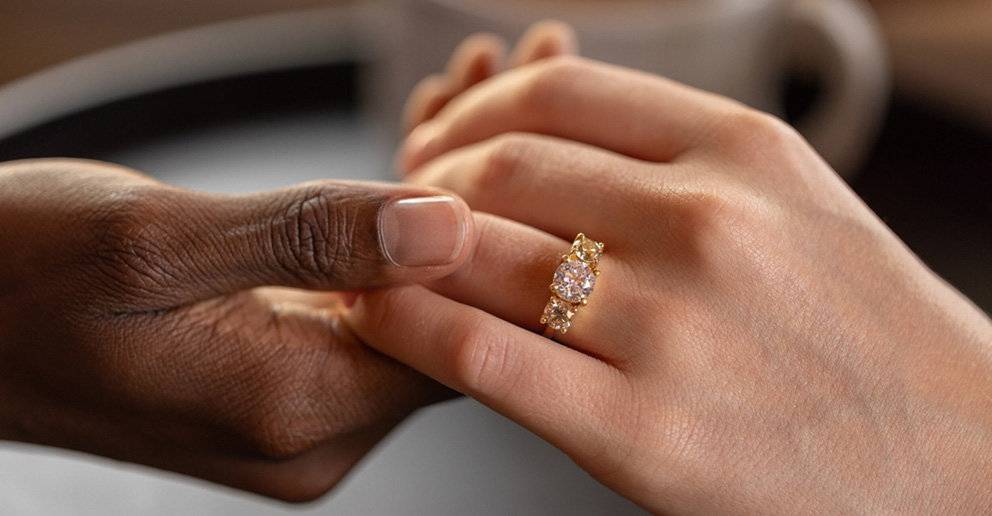

Natural diamond jewelry was identified as the most desired luxury jewelry category among US consumers in new research published by De Beers Group, while non-bridal purchases accounted for the majority of demand.
The company’s latest US Diamond Acquisition Study surveyed 18,500 women aged between 18 and 74 and forms part of its newly released Diamond Report, which examines consumer behaviour, retail trends and broader market dynamics in the US diamond sector.
Natural Diamonds Remain Preferred Luxury Jewelry Purchase
According to the study, 11% of respondents identified natural diamond jewelry as their most desired luxury gift, ahead of synthetic lab-grown diamond jewelry at 8%, coloured gemstones at 5% and plain gold jewelry at 4%.
The research also found that average spending on natural diamond jewelry increased significantly between 2023 and 2025. The average purchase price rose from US$3,242 to US$4,063 per piece, while average total carat weight increased from 1.65 carats to 1.86 carats.
The increase in both average spend and average carat weight suggests consumers purchasing natural diamond jewelry were buying higher-value pieces during the period covered by the study.
Non-Bridal Occasions Account for Majority of Purchases
While engagement and wedding jewelry remain important categories, the study found that non-bridal occasions now represent around three-quarters of natural diamond demand in the US.
Alongside traditional milestones, consumers are increasingly purchasing diamond jewelry to mark personal achievements such as starting a new job, receiving a promotion or celebrating individual accomplishments. Self-purchasing also continues to play a role in driving demand.
Diana Mitkov, lead researcher within Diamond Demand Insights & Analytics at De Beers Group, said: “The study findings highlight that today’s consumers aspire to own natural diamonds just as much as the generations that came before them, and ahead of any other jewelry product. And they are spending more per piece than ever before. But how and why consumers buy diamonds is evolving. Traditional life milestones such as getting engaged are no longer the only value driver for the industry; consumers are increasingly marking a wide range of occasions with natural diamonds and are looking for distinct pieces that feel personal to them.
“As unique miracles of nature, the attributes of natural diamonds play directly into these shifting consumer trends. The opportunity for the diamond industry is to ensure that natural diamonds continue to capture the value of this strong underlying desire in an increasingly competitive landscape by offering compelling designs across all sizes, colours and price points and for occasions that go well beyond traditional engagement or wedding jewelry.”
The study indicates that self-purchasing and gifting occasions account for a significant share of natural diamond acquisitions in the US market.
Gen Z Emerges as a Significant Diamond Consumer Group
The report identifies Generation Z as the second-largest generation purchasing natural diamonds by value. According to the study, Gen Z accounts for 23% of natural diamond demand value while representing 18% of the US population.
The generation spends an average of US$4,080 per natural diamond jewelry purchase, compared with US$2,250 among Baby Boomers.
Gen Z consumers were also found to acquire diamonds more frequently than other generations, averaging 1.83 diamond-related occasions per year compared with an overall average of 1.7. While bridal purchases account for 45% of Gen Z demand, birthdays and gifting from relatives represent a larger share of acquisitions than among older generations.
The study also found that Gen Z consumers place greater emphasis on self-expression and are more likely to use social media when researching diamond jewelry purchases.
The findings also point to the role social media plays in how younger consumers research diamond jewelry purchases.
Independent Jewellers Report Growth in Natural Diamond Sales
The Diamond Report also includes point-of-sale data from 950 US independent jewellers.
According to the report, natural diamond jewelry sales increased by 4% year-on-year during the fourth quarter of 2025 and by 9% during the first quarter of 2026.
De Beers said coloured diamonds and lower-colour diamonds in the K-Z range recorded stronger growth, with sales increasing by 15% and 19% respectively.
The report found stronger sales growth in coloured diamonds and lower-colour diamonds than in the broader natural diamond category during the period analysed.
Lab-Grown Diamond Value Share Remains Limited
The report notes that while synthetic lab-grown diamond jewelry continues to grow in unit sales, declining retail prices have limited its contribution to overall sales value.
According to the data, lab-grown diamond jewelry accounted for 15% of independent jewellers’ diamond sales by value in 2025, compared with 85% for natural diamonds.
The report also found lower demand for synthetic lab-grown diamonds above three carats, suggesting that consumer purchasing behaviour differs at larger stone sizes.
De Beers said continued price declines in the lab-grown sector could make it more difficult for retailers to increase transaction values through larger stones, potentially affecting future margins.
Outlook for the Diamond Sector
The report also examines wider market conditions affecting the diamond industry.
According to De Beers, global natural diamond demand returned to growth in 2025, supported by a resilient US economy and stabilising demand in China. The company also pointed to declining natural diamond production as a factor that could improve supply and demand balance over the coming years.
Eirik Wærness, executive vice president, corporate affairs and strategy, and chief economist at De Beers Group, said: “The diamond industry is evolving at pace with both supply and demand-side dynamics shaping the industry’s future. On the supply side, declining global production of natural diamonds is expected to support an improved supply-demand balance over the coming years. On the demand-side, a resilient US economy and stabilisation of demand in China saw global natural diamond demand return to growth in 2025 while the industry’s marketing efforts are showing encouraging signs of momentum.
“With retail returns from synthetic lab-grown diamonds likely to come under pressure in the future, we expect retailers will increasingly differentiate them from natural diamonds in their sales strategies. As these fundamentals continue to stabilise, the industry has a significant opportunity to reinforce the value of natural diamonds and support long-term growth.”
The report focuses on several themes affecting the US jewelry market, including changing consumer demographics, non-bridal purchasing occasions and the performance of natural and lab-grown diamond categories.
