



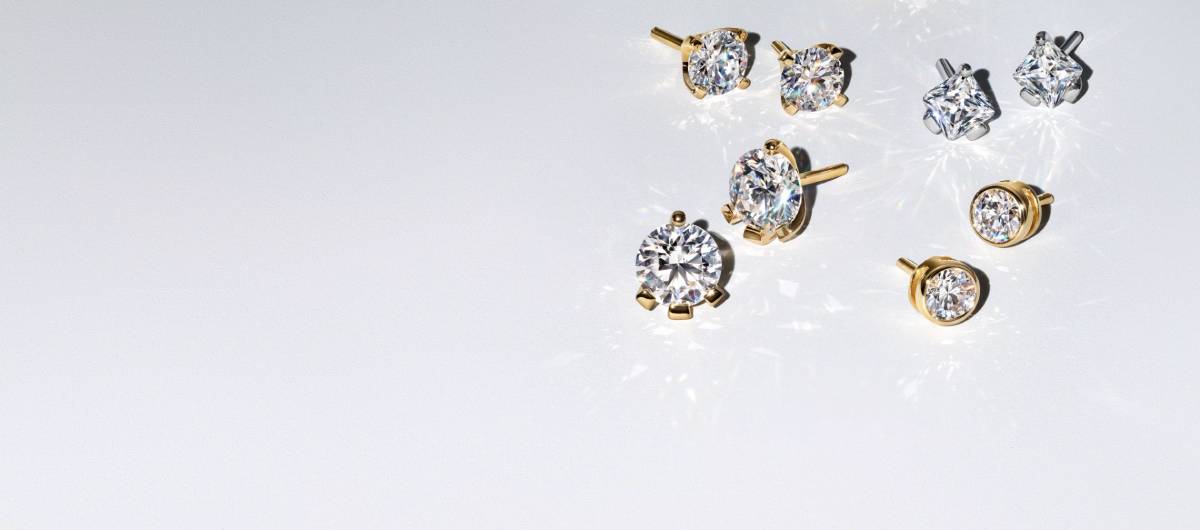

Pandora and the Natural Diamond Council (NDC) have publicly disagreed over the jeweller’s new carbon footprint disclosure initiative for lab-grown diamonds, with the NDC accusing the company of using misleading comparisons between lab-grown and natural stones.
The dispute follows Pandora’s announcement that it will disclose the carbon emissions associated with every lab-grown diamond it sells, introducing what it describes as a “fifth C” alongside the traditional diamond grading criteria of cut, colour, clarity and carat.
Pandora Introduces Carbon Footprint Disclosure
Pandora said the new information will cover emissions generated throughout the production process, from the raw materials used to grow the diamond through to cutting and polishing.
According to the company, a one-carat Pandora lab-grown diamond has a carbon footprint of 12.58kg of carbon dioxide emissions. Pandora claims this is around 90% lower than that of a natural diamond of equivalent size.
The figure is based on a comparison with carbon emissions data from a 2019 study commissioned by the Diamond Producers Association, the organisation that later became the Natural Diamond Council.
Berta de Pablos-Barbier, chief executive of Pandora, said: “We believe the future is about making diamonds more accessible while giving customers clarity on what they’re buying.
“We craft our jewelry with sustainability in mind, and by introducing the fifth C, we’re empowering consumers to make informed choices.”
Pandora said the carbon footprint assessment was conducted by external life-cycle assessment specialists and subsequently verified by EY. The company also stated that it uses 100% renewable electricity in the production of its lab-grown diamonds.
Natural Diamond Council Challenges Methodology
In an open letter, the NDC rejected Pandora’s claims and criticised the campaign’s use of comparative sustainability messaging.
The organisation said: “Pandora’s latest campaign is another disappointing PR stunt that unfairly attacks the natural-diamond industry to promote synthetic diamonds.”
The NDC argued that Pandora’s comparison fails to distinguish between natural and laboratory-grown diamonds as separate product categories and said the campaign risks creating confusion among consumers.
The council also questioned the validity of the underlying data, stating that the 2019 study relied on older information, with some data sets dating back to 2013, and that findings from a limited sample of producers should not be applied to the entire natural diamond sector.
It added: “This misleading narrative has real consequences for the tens of millions of people worldwide who depend on the natural-diamond industry.”
The NDC called on Pandora to engage with wider industry initiatives focused on environmental and social responsibility across both natural and lab-grown diamond sectors.
A debate that Dates Back to 2021
The latest exchange follows earlier tensions between Pandora and diamond industry organisations.
In 2021, Pandora announced it would cease using natural diamonds and instead focus on lab-grown stones, citing sustainability considerations. The move prompted criticism from several industry bodies, including the NDC, the Responsible Jewelry Council, the World Diamond Council, CIBJO and the International Diamond Manufacturers Association, which challenged the company’s sustainability claims.
Since then, Pandora has expanded its lab-grown diamond offering into multiple international markets including the UK, North America, Australia, New Zealand and Denmark.
What It Means for the Jewelry Industry
The dispute highlights the growing importance of environmental data and product transparency within the jewelry sector.
While sustainability reporting and carbon disclosures are becoming more common across consumer goods industries, there is currently no universally accepted carbon benchmark for diamonds. As a result, comparisons between natural and lab-grown stones remain contested, particularly when based on differing methodologies, geographic factors and energy sources.
For jewellers, the debate reflects increasing consumer interest in understanding the environmental impact of products alongside traditional quality characteristics. It also underlines the challenge facing the wider diamond industry as businesses seek to present sustainability information in a way that is transparent, verifiable and comparable across different product categories.
The discussion around carbon disclosure is likely to continue as both natural and lab-grown diamond sectors face growing scrutiny over environmental performance and supply chain transparency.
