



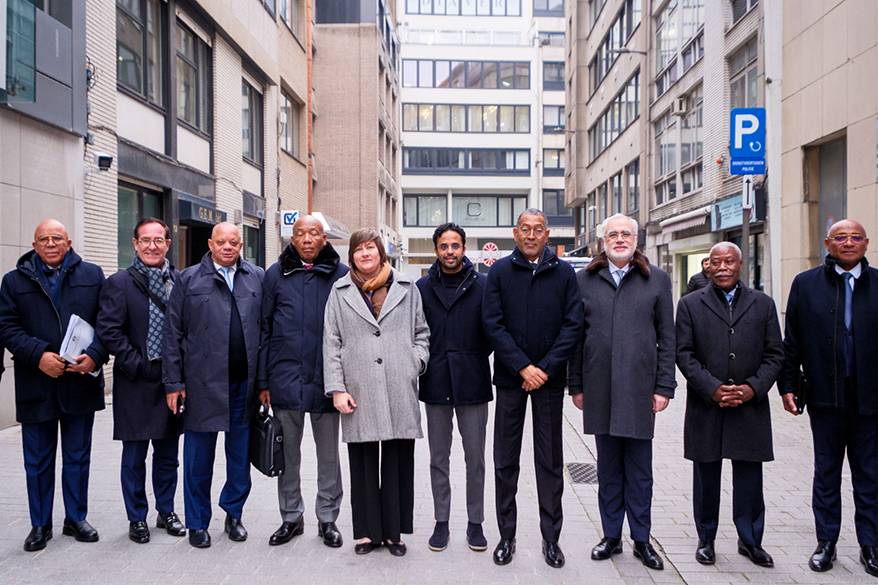

A senior Angolan government and industry delegation visited Antwerp this week for meetings with the local diamond sector, hosted by the Antwerp World Diamond Centre.
The visit focused on trade in Angolan rough diamonds and Antwerp’s role as a sales and distribution centre for international markets.
Delegation and Meetings
The delegation was led by Diamantino Azevedo, Angola’s Minister of Mineral Resources, and included José Ganga Junior, chairman of Endiama, and Eugénio Bravo da Rosa, chairman of SODIAM. Endiama oversees Angola’s diamond mining operations, while SODIAM is responsible for the sale of the country’s rough diamond production.
According to AWDC, the two-day programme included one-to-one meetings between Angolan institutions and Antwerp-based rough traders, cutters, tender companies, and clients in the jewelry sector.
Karen Rentmeesters, chief executive of AWDC, said: “This visit is much more than a diplomatic moment. We are bringing together concrete supply and demand. We are organizing targeted one-on-one sessions between Endiama and SODIAM on the one hand, and relevant players within the Antwerp diamond sector on the other – ranging from rough traders and cutters to tender companies – and linking them with major luxury jewelry brands.”
Angola’s Rough Diamond Production
In 2024, Angola produced more than USD 1.4 billion in rough diamonds, making it the world’s second-largest producer by value. Historically, a significant share of Angolan rough has been traded outside established centres. In recent years, the Angolan government has outlined a policy focused on increased transparency and compliance in the diamond sector. In 2024, 21 per cent of Angola’s rough diamond exports were shipped directly to Antwerp.
For producing countries, engagement with established trading centres can affect pricing mechanisms, buyer reach and downstream commercial relationships.
Implications For The Diamond Trade
For Antwerp-based companies, higher volumes of Angolan rough could expand supply, with stones sorted locally and sold through auctions or direct sales to SODIAM. For Angolan producers and sellers, Antwerp provides access to manufacturers, traders, and jewelry buyers operating in markets where provenance and compliance are increasingly important.
Rentmeesters said: “By trading more Angolan diamonds through Antwerp, we create added value. Not only economically, but also in terms of reputation. Antwerp helps position Angolan diamonds as a responsible, premium product, on par with diamonds from countries such as Botswana, Lesotho or Canada.”
For jewellers and the wider industry, the discussions underscore how producer countries and trading centres are adapting to evolving requirements for traceability, origin disclosure, and market access, which continue to influence sourcing decisions across the diamond supply chain.
