



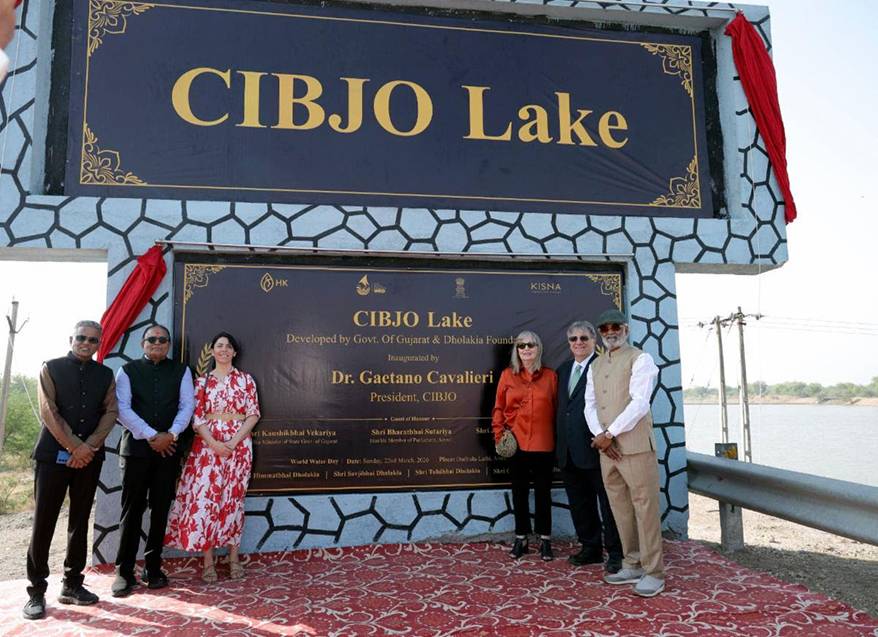

CIBJO has marked its 100th anniversary with the inauguration of a freshwater reservoir in Gujarat, India, developed to support water security in a drought-prone region.
The project, named CIBJO Lake, was officially opened on 22 March 2026, coinciding with World Water Day. Located near the village of Luvariya in the Saurashtra region, the reservoir was developed by the Dholakia Foundation, the philanthropic arm of diamond manufacturer Hari Krishna Group.
Project Scope and Regional Impact
CIBJO Lake spans approximately 15 acres and has a storage capacity of 156 million litres. It forms part of the Gagadiya river rejuvenation initiative, which aims to address water scarcity in Gujarat.
The reservoir is expected to support five villages and benefit around 12,000 farmers by improving groundwater levels and enabling multiple cropping cycles. According to the Dholakia Foundation, farmers in the area who previously managed a single crop cycle are now able to cultivate up to three cycles annually following similar interventions.
Water stress remains a significant issue in India, with an estimated 600 million people affected. In agricultural regions such as Saurashtra, improved water infrastructure is closely linked to productivity and income stability.
Industry and Government Participation
The inauguration ceremony was attended by CIBJO President Gaetano Cavalieri and Dr Savjibhai Dholakia, founder of Hari Krishna Exports. Representatives from government and public office were also present, including Shri Kaushikbhai Kantibhai Vekariya, Minister of State of the Government of Gujarat, Shri Bharatbhai Sutariya, Member of Parliament, and members of the Gujarat Legislative Assembly.
Addressing attendees, Dr Cavalieri said: “Shri Savjibhai Dholakia had a vision which is now being realised. Land that was previously barren has been developed into an area supporting water resources, vegetation and local communities.”
Dr Dholakia highlighted the role of community collaboration in delivering water conservation initiatives and supporting agricultural development.
Significance for the Jewelry Sector
The project reflects continued investment by companies within the diamond and jewelry sector in social and environmental initiatives in key sourcing and manufacturing regions. India remains central to global diamond cutting and polishing, and developments that support local communities are increasingly linked to responsible business practices and supply chain transparency.
CIBJO’s association with the project during its centenary year highlights its focus on sustainability and social responsibility within the industry.
Commenting on the initiative, Dr Cavalieri said: “The Dholakia Foundation’s work demonstrates how business activity can be linked with social and environmental initiatives. It is appropriate that CIBJO’s centenary is associated with a project that highlights the role of the jewelry industry in supporting communities.”
